
Every fall, the same thing happens: the temperature drops, and homeowners assume the building season is over. So they put the project folder in a drawer and plan to call someone in April. What they don't realize is that everyone else in the Fox Valley had the same idea — and by the time that April call happens, the design queue and the install calendar are already filling up for summer.
Here's the truth from a crew that works through Wisconsin winters: we install pergolas, decks & sunrooms year-round. The ground freezing doesn't stop the build — it just changes the method. If you're wondering whether you can build in winter in Wisconsin, the answer is yes, and the how is worth understanding before you write off the season.
Why people think winter construction isn't possible
The assumption is understandable. Frozen topsoil and a foot of snow cover make digging look impossible, and for a homeowner with a shovel and a bag of Quikrete, it basically is. Digging post holes by hand in January is not a real option, and pouring concrete into frozen, unprepared ground is a genuine problem.
But that's a DIY limitation, not an industry one. A licensed contractor with the right foundation approach isn't standing in your yard with a shovel. Winter construction in Wisconsin is standard practice for builders who plan footings correctly and have powered equipment for the jobs that start after the freeze.
How we actually set footings through a Wisconsin winter
There are two legitimate footing paths, and which one applies depends mostly on timing — not on whether the project is possible.
Poured concrete footings, set before deep frost
The first path is the traditional one: poured concrete footings, dug and poured before the ground fully freezes. In the Fox Valley, that window typically runs through November and into early December, depending on the year. The footings go in, cure, and are sitting below grade before deep frost sets in — then framing and assembly continue on top of them through the winter.
This is the standard timing for projects that get designed in late summer or fall. It's the same message we made in our post on when to start your outdoor project in Wisconsin: design early, and the footing work lands in the calendar while the ground is still cooperative. If you're reading this in the fall, that window is exactly where you want to be.
Engineered pier footings for frozen ground
The second path covers jobs that start after the ground has already frozen: engineered, code-approved helical or drilled pier footings — often called screw piles. Instead of excavating and pouring, these piers are mechanically driven or drilled below the frost line with powered equipment. No hand-digging, no thawing frozen soil, no waiting for April.
These aren't a workaround or a shortcut. Engineered pier footings are designed, engineered, and permitted the same as poured footings, and they're a well-established method for deck footings below the frost line. For pergolas, decks, and cabanas that start mid-winter, they're often the right tool outright.
The frost line rule doesn't change
Whichever method is used, one requirement is constant: footings must reach below the local frost line. The Wisconsin Uniform Dwelling Code requires footings below frost depth, and in the Fox Valley that runs roughly 42 to 48 inches depending on soil and county. That rule is true in July and it's true in January — winter doesn't relax it, and neither do we. The two methods simply reach that depth differently depending on ground conditions.
The ground doesn't stop the build. It just decides which footing method we use.
What actually pauses in deep winter (and what doesn't)
We'd rather be straight with you than sell you a fantasy, so here's the honest version. Extreme cold snaps and heavy snow events can shift a schedule by days — a minus-twenty morning is not a work morning, and a blizzard is a blizzard. Some finish work is also temperature-sensitive: staining, and certain adhesives and sealants, have minimum application temperatures, and we schedule those accordingly.
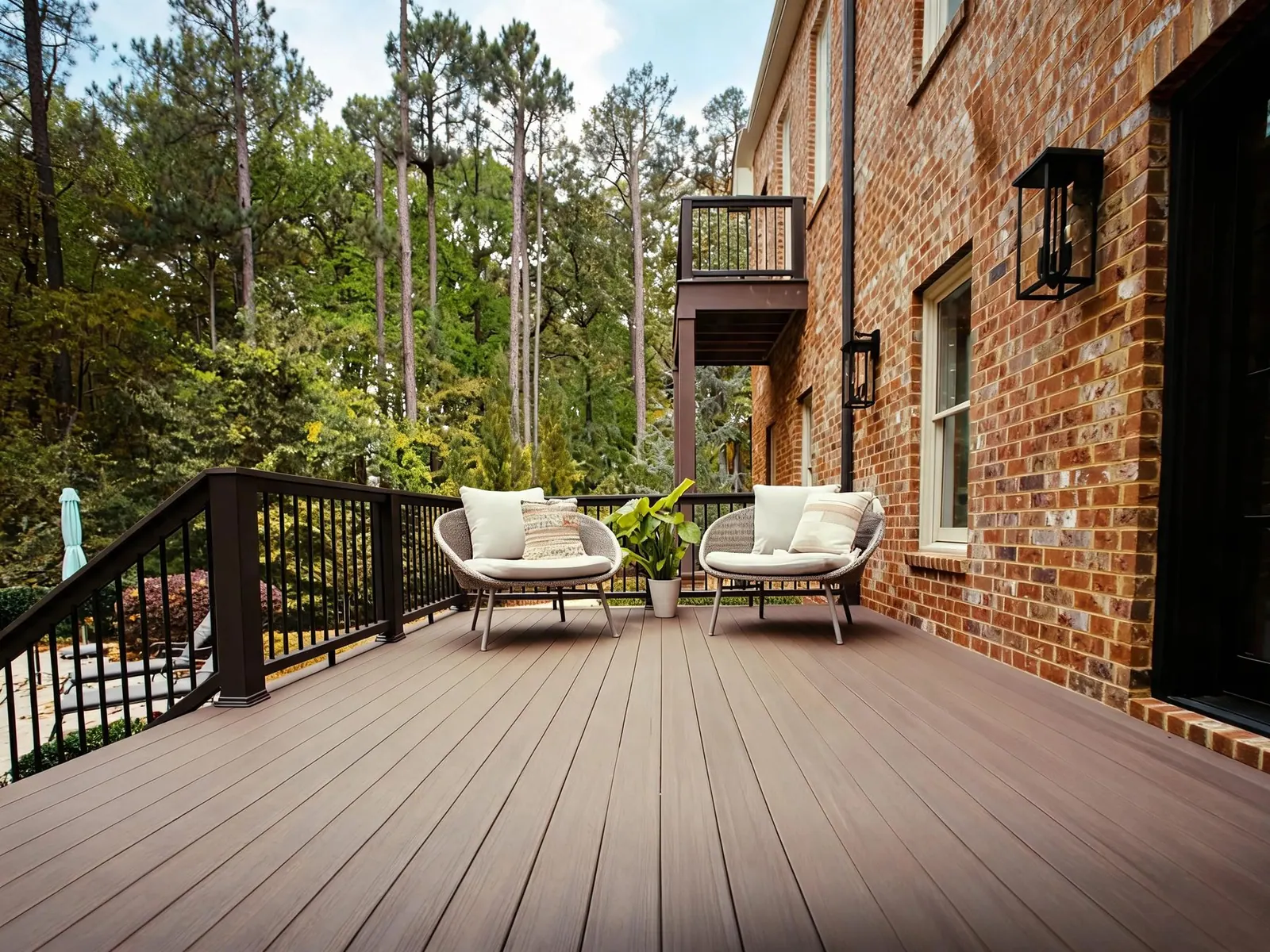
What doesn't pause: framing, aluminum pergola assembly, and pier-footing work. A StruXure Pergola X structure, for example, is engineered aluminum — the same material that shrugs off Wisconsin winters for decades once it's standing, as we covered in our post on louvered pergolas in a Wisconsin winter. Composite deck framing and railing install the same way. The majority of a typical project is not temperature-sensitive at all.
Why building in winter actually works in your favor
Winter isn't just possible — it often comes with real advantages over joining the spring rush.
- Permitting and municipal review move at the same pace or faster, because there's less volume in the queue.
- Material lead times are often shorter outside peak season.
- A winter-start project is frequently finished and ready before the first warm weekend of spring — while spring-only callers are still waiting for a design slot.
- Your yard gets months to settle before you're furnishing and planting around the finished structure.
This is what year-round outdoor construction in Appleton actually looks like from the homeowner's side: you call in November, design through the holidays, footings go in by pier or before the deep freeze, and by the time your neighbors start collecting quotes in May, you're already using the space.
The takeaway: winter is for starting, not waiting
If there's one thing to take from this, it's that the spring phone call is the expensive one — not in dollars, but in months. Winter is the time to lock in design and footing work, not the time to wait for April. Whether your project is a pergola, a deck, a cabana, or a pool, the season is not the obstacle people assume it is.
Take a look at our Pergola X and decking pages to see what we build, then get a free estimate. We'll walk your yard — snow and all — and put a real plan and timeline together for it.
Keep Reading